Skip Hire in Hoxton

Skip hire in Hoxton gives households, landlords, builders and local businesses a practical way to manage bulky waste without overfilling bins or leaving material stacked on site. Our service is centred on simple container hire for mixed everyday waste streams, with options that suit routine clear-outs, refurbishment debris and ongoing trades work. If you need a straightforward way to collect waste and keep a project moving, we can help you choose a skip size that fits the job.
The most useful place to begin is with the type of waste you have and the space available for placing the skip. A well-matched hire can reduce extra handling, avoid unnecessary collections and make disposal more organised from start to finish. For people comparing options, our skip sizes and prices page is a sensible place to weigh up what different container sizes are suited to, while keeping the choice grounded in the amount of material you expect to produce.
If you are ready to move ahead, request a quotation when you have a rough idea of the waste type and how long you may need the skip.
Domestic clear-outs and home projects

Domestic skip hire is often the simplest answer when a property starts generating more waste than a few council bags can manage. Old furniture, broken household items, stripped flooring and general clutter can be gathered into one container rather than moved in repeated car loads. That is especially helpful during a loft tidy, an end-of-tenancy clear-out or a room refresh where the work creates a steady stream of unwanted material.
For houses and flats, access matters as much as volume. A skip needs enough room for safe placement, and the load itself should be sensible for the type of job being carried out. Mixed general waste, wood, plasterboard and non-electrical household debris are common examples of what people plan for, while specialist items should be separated where required. If you are unsure what is suitable, our what can go in a skip guide helps you check the basics before you book.
Choosing the right size for household waste
Picking the right container is usually easier when you think about what will be removed in each stage rather than the whole project at once. A smaller skip can suit a clear-out with predictable waste, while a larger option may be better for refurbishments or heavy, awkward materials. The aim is to avoid over-ordering while also leaving enough room for the waste to sit level and safely inside the skip.
Price is often influenced by size, waste type, hire length and any collection conditions connected to placement. A clear description of the job helps the quotation reflect the actual work rather than an estimate based on guesswork. Simple planning at the start usually saves time later, particularly if the property has restricted access or shared parking to work around.
Builders waste and renovation debris

Builders skip hire is designed for the heavier, messier side of domestic and commercial improvement work. Brick, rubble, broken tiles, timber offcuts, packaging, old fixtures and mixed renovation debris all build up quickly, especially when several trades are involved. A skip on site keeps waste together and supports a cleaner working area, which helps the job stay organised and reduces the need for repeated trips away from the property.
For refurbishment work, the key is to think about the sequence of tasks. Strip-out material usually arrives first, followed by packaging, old fittings and the waste created as surfaces are opened up or replaced. A skip can be useful throughout those stages, but it should be matched carefully to the weight and make-up of the debris. Heavier waste needs sensible loading, and separate waste streams may be easier to manage when a project produces both inert material and lighter mixed rubbish.
Where building work is taking place near other properties, it is worth considering how the container will be loaded and whether the job needs a permit or an alternative placement. We can also support customers looking at builders waste removal when a collection-focused approach is more practical than holding waste on site for longer than necessary.
Commercial and site waste management

Commercial skip hire suits workplaces that generate recurring waste from fit-outs, shop refits, routine maintenance or stock changes. Offices, shops, hospitality venues and industrial units all produce waste in different forms, so the service needs to stay flexible. Some clients prefer a single skip for a defined project; others need a more regular arrangement that supports an active site without disrupting day-to-day operations.
For commercial use, the most important decisions are usually location, load type and timing. A skip should be set where it can be used efficiently without blocking loading bays, entrances or emergency access. Mixed commercial rubbish, light bulky waste and project debris are common requirements, while specialist materials may need separate handling. If the job involves a larger working area, our site clearance service can be useful when waste is spread across different parts of the premises rather than concentrated in one room or yard.
- Use a skip for bulky waste that would otherwise take repeated journeys to remove.
- Choose a size that leaves room for safe, level loading.
- Keep separate any restricted or specialist materials that need different handling.
- Plan placement so the container supports the work instead of interrupting it.
Skip permits, access and placement
Placing a skip is not always as simple as leaving it on the nearest available patch of ground. Some properties have limited frontage, narrow roads or shared access that affect where the container can sit. In those cases, it helps to think ahead about access for loading, vehicle movement and whether anything needs to be kept clear for neighbours or visitors. A practical setup usually makes the whole hire easier to manage.
Where a skip must sit on a public highway or another controlled area, a permit may be required. That can depend on the exact location and the local rules that apply to the placement. We keep the process focused on the needs of the job rather than overselling it: the point is simply to make sure the skip can be used lawfully and sensibly. If you want to read more about the background, our skip permits page sets out the general subject in more detail.
What helps when requesting a quote
Useful quotation details usually include the location, the waste type, approximate volume and any access constraints that could affect delivery or collection. Photos can be helpful where the site is cramped or the waste is awkwardly stacked, though they are not always necessary. Keeping the description clear and specific often means you receive a quote that reflects the real job rather than a broad estimate.
If the placement needs to stay on private land, it is still worth considering surface protection, overhead clearance and whether doors, driveways or gates need to stay usable. These are small checks, but they often make a practical difference to how smoothly the hire works. For customers comparing longer hires against shorter ones, the overall arrangement should suit the project rather than the other way round.
About Hoxton
Hoxton is an area in the London Borough of Hackney, close to Shoreditch, Haggerston and the City fringe, and it sits within the wider history of inner north-east London. Once part of the parish and later the Metropolitan Borough of Shoreditch, the district developed from rural edges into a densely built urban neighbourhood during the nineteenth century, shaped by industry, housing growth and transport changes. Much of the area’s character reflects that layered past, with a mix of older streets, later infill and contemporary redevelopment. Hoxton Street remains one of the best-known local thoroughfares, and the surrounding streets show the contrast between surviving historic fabric and newer apartments, workspaces and mixed-use buildings. The name is also associated with the former Hoxton Market area and with the broader cultural shift that brought galleries, studios, bars and creative businesses into the district from the late twentieth century onwards. Nearby green spaces, including Hoxton Square, offer a quieter counterpoint to the busy roads and dense built form. The area has long been connected to changing forms of labour, migration and housing, which can still be read in the street pattern and the range of building types. Its position between established residential streets and fast-changing commercial pockets makes it part of one of London’s most recognisably mixed urban districts, where old and new sit closely together in a compact footprint.
Skip hire for lofts, garages and house clearances
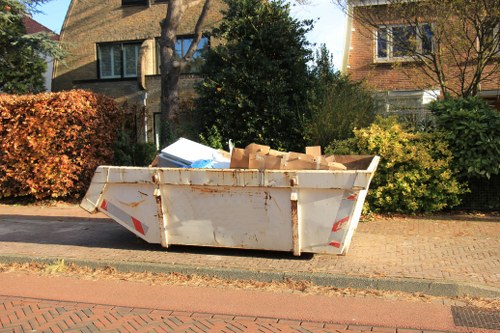
Many customers in Hoxton look for skip hire when a property has accumulated more than can be dealt with in a single weekend. Garages, basements, spare rooms and storage cupboards often hold the kind of mixed items that are bulky, dusty or inconvenient to transport piece by piece. Skip hire helps bring those items together into one removal plan, especially where furniture, packaging, broken household items and general clutter are all coming out at once.
House clearance work tends to be easier when the waste is sorted by what can go into the container and what needs separate handling. That approach keeps the load more manageable and reduces the chance of awkward sorting later on. For customers dealing with a major clear-out, our house clearance page may be useful where the job involves removing contents from rooms as well as dealing with the waste itself. The most suitable option depends on whether you need the flexibility of a skip, or a more direct clearance service.
Our garage and loft clearance service is another relevant option when the work centres on one storage area rather than the whole property. That can be a better fit if access is tight, if items are awkwardly stacked, or if the amount of waste is concentrated in a single space. If you are not sure which route suits the job, a short description of the items and the layout is usually enough to start narrowing it down.
Waste types, recycling and responsible disposal
Not every load is the same, and good skip hire depends on understanding the material rather than treating all waste as interchangeable. General mixed waste from clearing, repairing or refurbishing a property is common, but heavy inert material, timber-heavy loads, garden waste and site debris may each suit different handling. That is why it helps to be precise about the job at the quotation stage: it supports better planning and avoids unnecessary complications on collection day.
Recycling is an important part of the wider disposal process, and many customers want a service that keeps usable material out of the wrong stream wherever possible. That does not mean every item can be recycled, but it does mean the way waste is loaded and separated can matter. Our waste recycling services page explains the general approach to sorting and recovery, while the recycling and sustainability page covers the broader principles behind responsible disposal.
Items that need extra care
Some materials are not suitable for a standard mixed-waste skip and need different arrangements. Those can include hazardous waste, certain electrical items and other specialist loads that require separate handling or treatment. When a project involves anything unusual, it is best to identify it early rather than adding it to the pile and hoping it can be dealt with later. This reduces the risk of delays and helps keep the hire straightforward.
We also provide information on hazardous waste disposal for customers who need to understand those limits before booking. In some cases, a standard skip is only part of the solution, and a more specific disposal route is needed for items that cannot be mixed with general rubbish. Being clear from the outset makes the overall process more efficient and helps avoid avoidable rehandling.
Other removal services that support skip hire
There are times when a skip is the best answer, and other times when a collected removal service is a better fit for the space, the timing or the type of waste. That is why it can be useful to compare the main hire option with other services before making a decision. A customer clearing an entire site may prefer one approach, while someone removing a specific load from a basement or upper floor may find a different service more practical.
Our rubbish removal page is relevant where the waste needs to be taken away directly rather than stored in a container, while grab hire services can suit heavier or loose material that is easier to collect with mechanical assistance. For larger, more complex projects, construction waste disposal may also be worth considering when the waste stream is tied to an active build or refurbishment programme.
When you are comparing services, think about how the waste is being produced, how quickly it needs to leave the site and whether the working area has room for a container. The best option is the one that matches the real conditions on the ground. If a skip is the clearest solution, a concise enquiry is enough to begin. If it is not, the alternatives above can help you choose another route with less disruption.
Booking and quotation details
When arranging skip hire, a clear request usually includes the location, the kind of waste involved, the approximate amount and any space or access limits that could affect placement. Those details help shape a sensible response and reduce the chance of choosing the wrong size or arrangement. For many customers, the aim is simply to keep the project moving without creating extra handling or unnecessary waste journeys.
For a cleaner quotation process, it also helps to say whether the skip will be needed for domestic, trade or mixed use, and whether the waste is likely to change as the work progresses. That information does not need to be long, just accurate. If you already know the basics, you can get in touch for a quotation once you are ready to confirm the practical details and choose the most suitable hire option.
Whether the job is a home tidy, a renovation or a workplace clear-out, the simplest next step is to match the container to the waste and the site. Tell us what you need moved, keep the description practical and focus on the outcome you want: a tidy, manageable way to dispose of the load without slowing the work down.